
Benefits of Demand Gen Campaign and when to use it in Google Ads
Demand generation (demand gen) is the set of marketing activities that drives powerful awareness and interest for your product or service across the potential customer’s journey, which usually works better for awareness and attracts that potential audience before they even start searching for your products or services. A well-designed and planned Demand Gen turns individuals into engaged prospects by educating, building trust, and seeding intent long before a conversation begins.
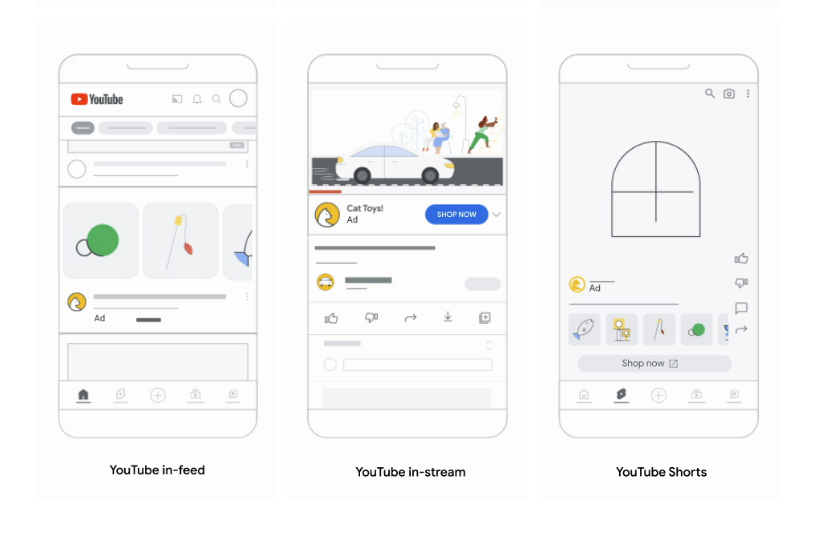
Deman Gen campaigns leverage AI-powered optimization to deliver visually compelling multi-format ads, including videos, images, and carousels, to millions of monthly active users. The platform automatically creates optimal combinations of creative assets, messaging, and placements to drive measurable action.
This post outlines the concrete benefits, identifies situations where Demand Gen is the right choice, provides essential KPIs, and offers channel tactics to help you decide whether to run a Demand Gen campaign in Google Ads.
Why You Should Run Demand Gen Campaigns?
Broader brand awareness and top-of-funnel (TOFU) growth:
Demand Gen can increase the number of people who are aware of your brand, product category, or service. Unlike tactical lead capture, it focuses on both the volume and quality of attention (content views, event attendees, and organic search traffic), thereby increasing the probability of generating future leads.
Achieve Impressive Performance Improvements
Early performance data demonstrate significant advantages for advertisers adopting Demand Gen. According to Google, during the first semester of 2025, over 100 launches saw a 20% increase in conversions or conversion value, indicating a notable enhancement in this type of campaign.
Improved pipeline predictability and Customer Lifetime Value (CLV)
Demand Gen helps you fill the funnel with prospects who understand and might be aligned with your brand. This leads to steadier pipeline growth, improved forecasting, and higher customer lifetime value (CLV), as customers acquired through influence tend to stay longer and make more purchases/leads.
Utilize Advanced AI-Powered Audience Targeting
Demand Gen campaigns stand out in connecting brands with high-value prospects through unique targeting features. The platform supports custom audiences built from keywords, URLs, or app usage patterns, as well as powerful lookalike audience segments that identify users with similar behaviors to your existing customers. This is a crucial key when you want to reach a specific audience.
Gain Comprehensive Performance Insights
Understanding the impact of your DemandGen campaign extends beyond immediate conversions and regular metrics such as CVR and CTR. Demand Gen provides three critical measurement tools that you should consider before using this type of campaign in Google Ads:
Brand Lift: Measures the impact of ads on perceptions of your brand, products, or services.
Search Lift: Tracks increases in brand-related searches driven by ad exposure.
Conversion Lift: Quantifies conversions and actions directly attributable to ad views
These insights enable marketers to understand the full-funnel value much better, connecting awareness activities to downstream business outcomes. However, please note that there are specific requirements that must be met before you can utilize these features.
Benefit from Continuous Feature Enhancements
Google keeps refining the Demand Gen campaings constantly. Recent updates include AI-powered image and video enhancement tools that automatically aim to optimize creative variations, asset uplift A/B experiments, and expanded brand suitability controls for Discover feed placements.
When should you use a demand gen campaign?
Ideal Scenarios for Demand Gen Implementation
Launching New Products or Entering New Markets
When introducing unfamiliar products or services, search volume may be too low, making it difficult to increase traffic and conversions. Therefore, Demand Gen is a great option for building awareness and educating potential customers, creating the foundation for future search demand.
Scaling Beyond Search Campaign Limitations
Search campaigns tend to deliver higher conversion rates due to their intent-driven audience, but Demand Gen campaigns generally have lower costs per click (CPC) since this campaign reaches broader audiences and has a less competitive nature. When audience saturation occurs, Demand Gen provides cost-effective expansion opportunities.
Leveraging Strong Visual Assets
If your brand has plenty of assets, such as video content, high-quality product photography, Demand Gen maximizes their impact across the different Google channels.
Long sales cycles
When you have sales cycles that are long or consultative (common in B2B / enterprise / SaaS), the audience requires multiple touchpoints before making a purchase or generating a lead. The Demand Gen campaign can make the process shorter by establishing trust earlier.
When to Avoid Demand Gen
Bottom-Funnel Conversions
Demand Gen is not ideal for bottom-of-funnel strategies; it's about sparking interest, building intent over time, and creating awareness. Thereby, if you want instant returns and have a strong search volume, search campaigns might be more suitable for you.
Limited Creative Resources
If you possess the ability to generate diverse creative content, you may want to consider utilizing PMax and Demand Gen. However, without compelling videos or images that effectively differentiate your brand, campaign performance will likely be weak, and you may not achieve the results you expect.
Insufficient Conversion Tracking
While Demand Gen can optimize for clicks, maximizing its potential requires robust conversion tracking that captures full customer journey attribution across multiple touchpoints.
Budget limited
If you have a very limited monthly or daily budget, Gemand Gen might have a poor reach and, therefore, performance. Moreover, for best practices, it is recommended to set up brand, search, and conversion lift; however, to achieve this, certain budgeting recommendations should be followed by your brand.
Strategic Implementation Best Practices
Start with a Clear Audience Definition
Begin by identifying your target audiences and defining the role Demand Gen will play in your funnel. Create custom audiences using first-party data, then supplement with lookalike segments to expand reach while maintaining relevance. However, if possible, use two different Google Ads campaings.
Invest in Multi-Format Creative Testing
Ensure you allocate a budget for a creative production, such as video and image assets, to the required specifications. Test different creative variations through asset uplift experiments, using performance data to refine performance and make decisions.
Monitor Placement Performance Rigorously
Treat YouTube placements with the same scrutiny as search terms in search campaigns. Identify and exclude placements that consume a significant budget and are too broad or irrelevant for your niche. Without generating value for your brand, this will help to allocate your campaign's effort to performing innovation.
Integrate with Broader Marketing Strategy
Demand Gen performs best within a comprehensive approach that includes search campaigns to capture activated demand and Performance Max to maximize conversions across Google's entire ecosystem. The most successful strategies effectively leverage the unique strengths of each campaign type throughout the customer journey; therefore, it is important to understand the difference between those campaings.
Test different Demand Gen campaigns
Since there are multiple ways to target and reach your desired audience, it is recommended to set up at least two different types of campaigns: one for retargeting and one for prospects. Ensure that the creative assets are aligned with the campaign goals. That way, you might have better insights of the campaign performance, and the budget will be optimized.
As a conclusion, Demand Gen is a powerful type of campaign in Google Ads that helps businesses reach broader audiences, while still enabling them to become customers. Therefore, Google and its AI can properly understand different audiences and use the data to target those prospects. However, it is essential that people understand that Demand Gen campaigns will not provide results in days; positive outcomes may be observed after a few months, but only with consistency. Nevertheless, with detailed planned strategies and high-quality assets, those positive results will likely be seen in the future.
Quick FAQ
Can I use Demand Gen if I don't have video content?
Yes, though performance improves significantly with video. You can run Demand Gen campaigns only using single images or carousels. However, for best practices, it is highly recommended to use videos.What's a realistic conversion rate for Demand Gen?
There is no specific CVR benchmark; however, this will depend mostly on the type of your category and budgets. Nevertheless, you might expect an average CVR of 1% - 4%. However, you may get an idea of a potential conversion rate based on your search campaign, as Demand Gen CVR is likely to be lower than that of a search campaign.
Should I stop using PMax campaigns and switch to Demand Gen?
No, use them together strategically. Performance Max optimizes bottom-of-the-funnel conversions across all Google channels, while Demand Gen builds top-to-mid-funnel awareness on visual placements. Therefore, strategically using both can be a powerfull combination which will help your performance be stronger.
